A per-side training log that shows which side is behind
Single-arm presses, split squats, single-leg deadlifts and one-arm rows are two lifts in one set: a left and a right. Most workout logs keep them as one number, so a side that lags stays out of sight. Escalo logs each side as its own set, charts the two side by side, and names the gap when one falls behind.
Log each side on its own
Every set of a per-side movement has two cards, Left and Right, each with its own load and reps. One checkbox ticks the pair, and the set counts as done once both sides are in.
Each empty field shows a grey suggestion from that side's own last session. A left-side number never appears in the right card, so the suggestion is the weight that side actually lifted. Change it, or tick to accept it.
The library has more than a hundred per-side movements, among them the Bulgarian split squat, the single-arm kettlebell swing and the cable Pallof press. A custom exercise can log per side too.
See the gap while you train
During a session, Escalo compares the best load on each side. The gap is the difference between the sides divided by the stronger one, and once it passes 10% the session says so, in a sentence like Left side has trailed by 14%.
Once your history shows one side trailing by more than 10% across at least two sessions, that side's card comes first and is marked trailing, so you start each set with it. Nothing else changes: the numbers are still yours to log.
Two lines on one chart
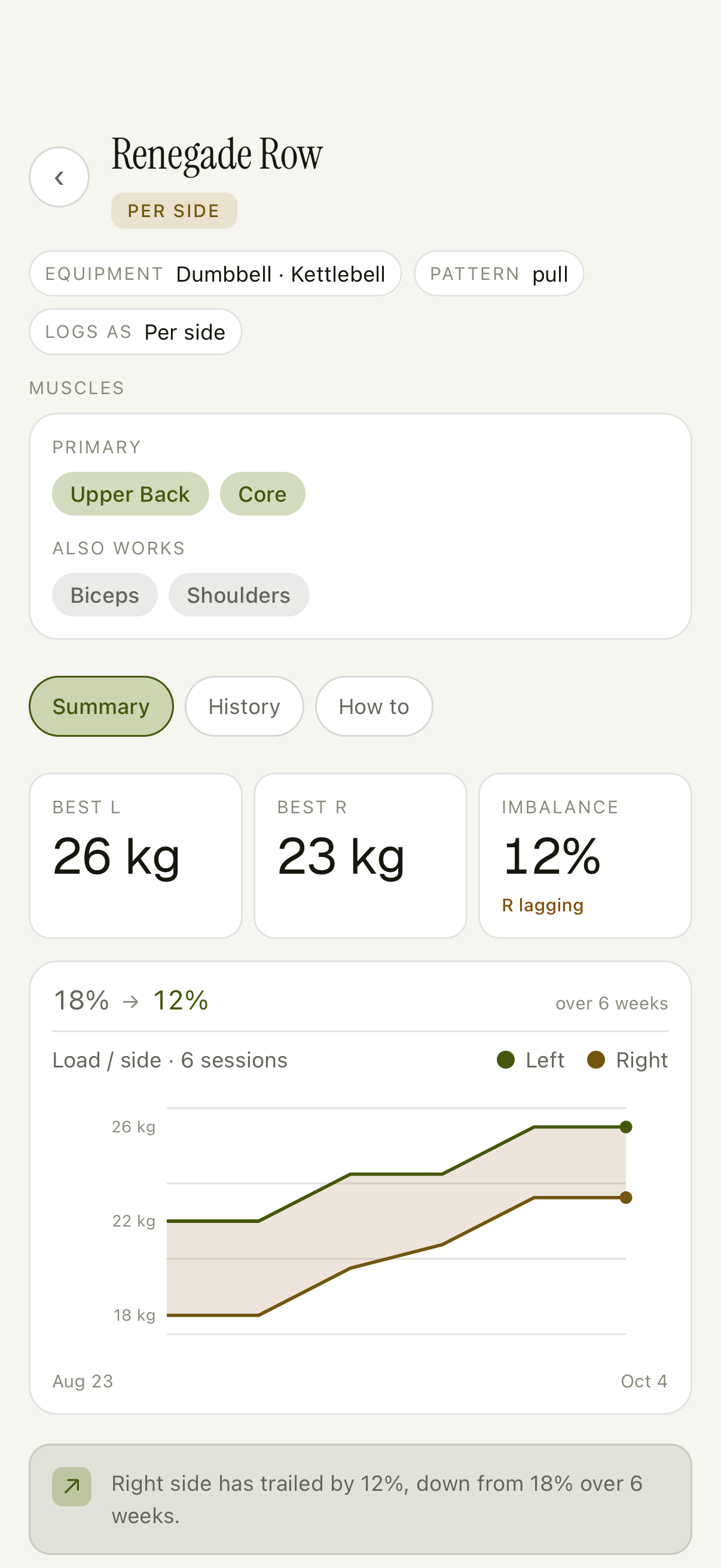
An exercise's progress page plots left and right as two lines, with the gap between them shaded. Beside the chart sit the best load for each side, the current imbalance and which side lags, and a trend line that reads like this:
Right side has trailed by 12%, down from 18% over 6 weeks.
Records are kept per side: the heaviest load, the most reps and an estimated one-rep max, for left and for right.
Across all your training
Per-exercise progress, the live note and the trailing-side card are included in Free.
Escalo Pro adds the Balance report. It ranks every per-side exercise with at least two sessions by the gap in the work each side did over its last four sessions, and says whether that gap is closing or widening. The same page compares push with pull and squat with hinge, and lists the muscle groups getting the least work. You can read it over one, three, six or twelve months.
What Escalo does not do
Escalo reports what you logged. It does not prescribe a correction or build a program around the weaker side. What to do about a gap is your call, and the two lines show whether it worked.
Per-side logging sits in the same session as everything else: carries by weight and distance, holds by time, and supersets ticked a round at a time.